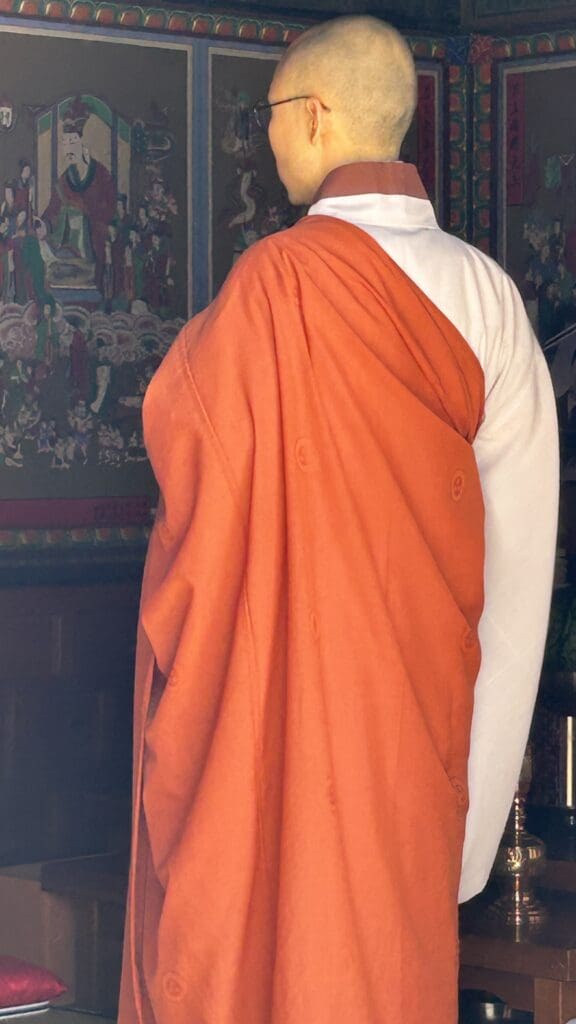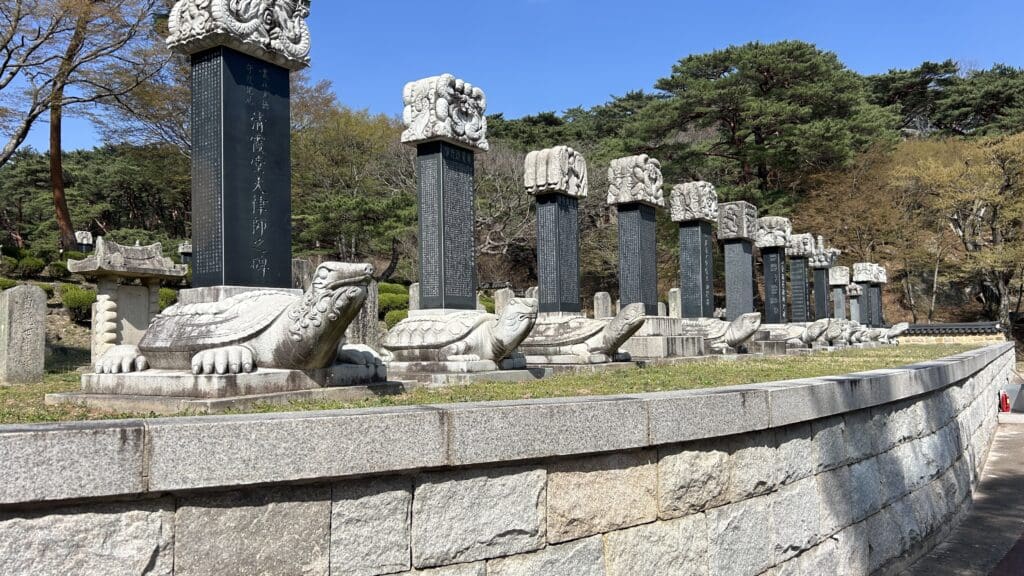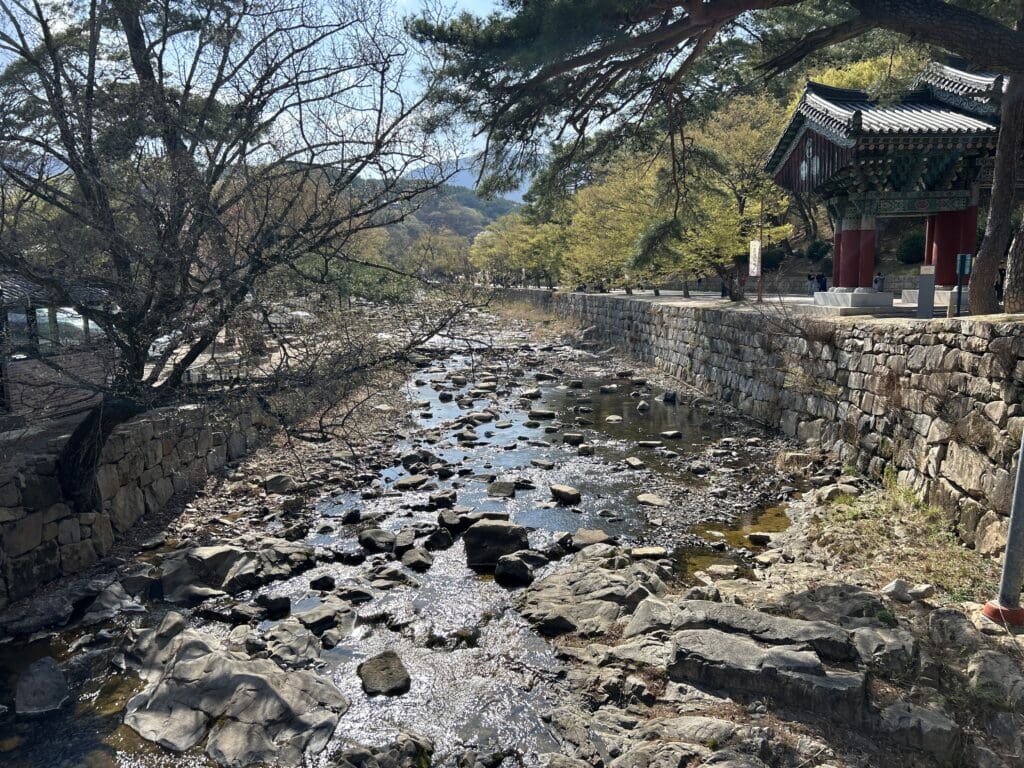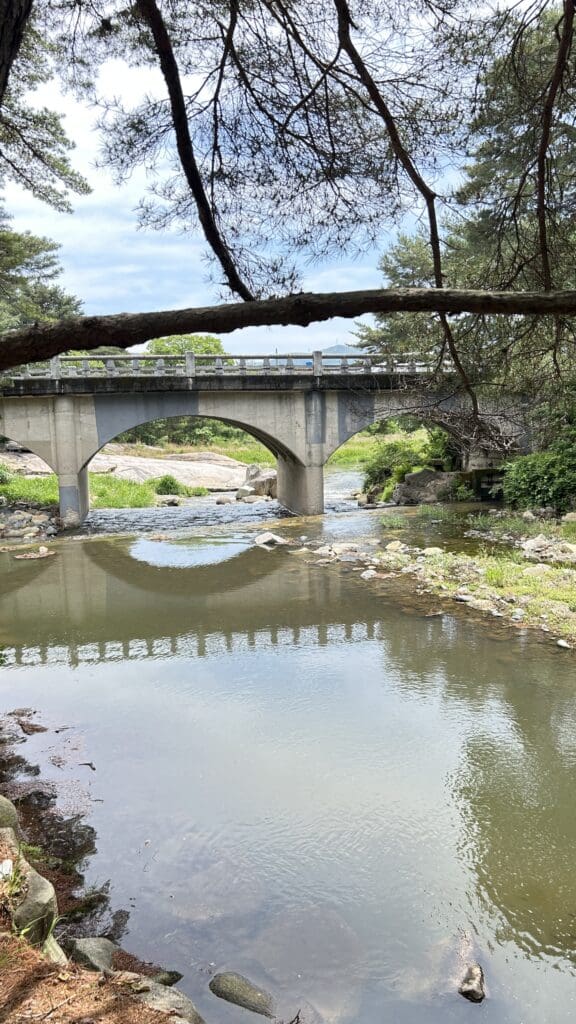

When we visited Biro-am, that small hidden temple above Tongdosa, it already felt like stepping into a secret. But behind that secret lies a bigger story. Because Biro-am is part of something greater: Tongdosa, one of Korea’s oldest and most important Buddhist temples. And the longer you walk around there, the more layers of history and meaning you discover.
Tongdosa – relics, guardians, and the silence of the mountains
How Tongdosa began
Tongdosa was founded in 646 AD by the monk Jajang Yulsa, during the Silla kingdom. At that time Korea was still divided into three kingdoms, and Buddhism played a key role in uniting the country.
Jajang studied in China, at the great Buddhist centers of the Tang dynasty. There he received something very precious: relics of the Buddha himself – a tooth, some bone fragments, and pieces of his robe. With these treasures, he returned to Korea and built Tongdosa as a temple to keep them safe.
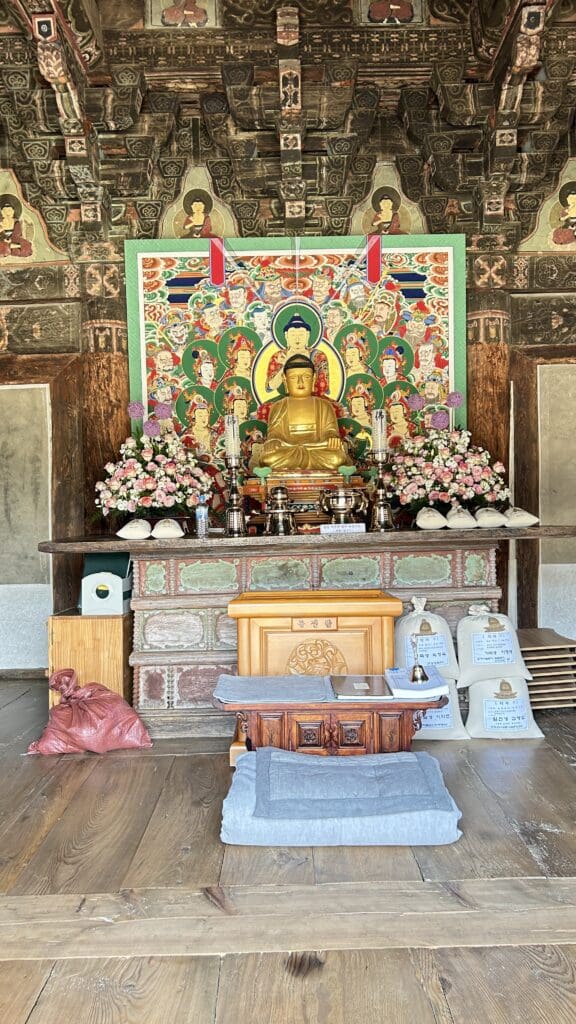
That is why Tongdosa is so special: in the main hall you don’t see a big Buddha statue, as in most temples. Instead, the heart of Tongdosa is the reliquary where those sacred relics are kept. For many Buddhists, coming here is a real pilgrimage, a once-in-a-lifetime moment.
Who was the Buddha?
Those relics take us back to the Buddha himself, Siddhartha Gautama. He lived about 2,500 years ago in what is now Nepal and northern India. He was born as a prince, but he left his palace when he saw suffering in the world — sickness, aging, and death. For years he searched for answers.
Under a bodhi tree he finally found enlightenment: an understanding that everything changes, that suffering can be overcome, and that compassion and wisdom are the way forward. After his death, his remains were divided and spread across Asia, so that people everywhere could feel connected to him. Tongdosa is one of those places.
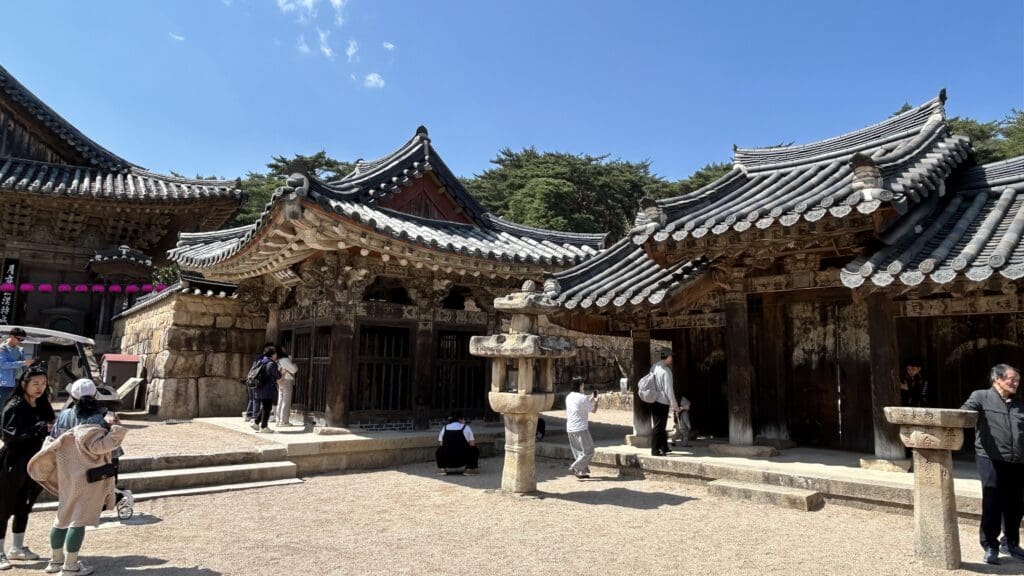
The temple grounds
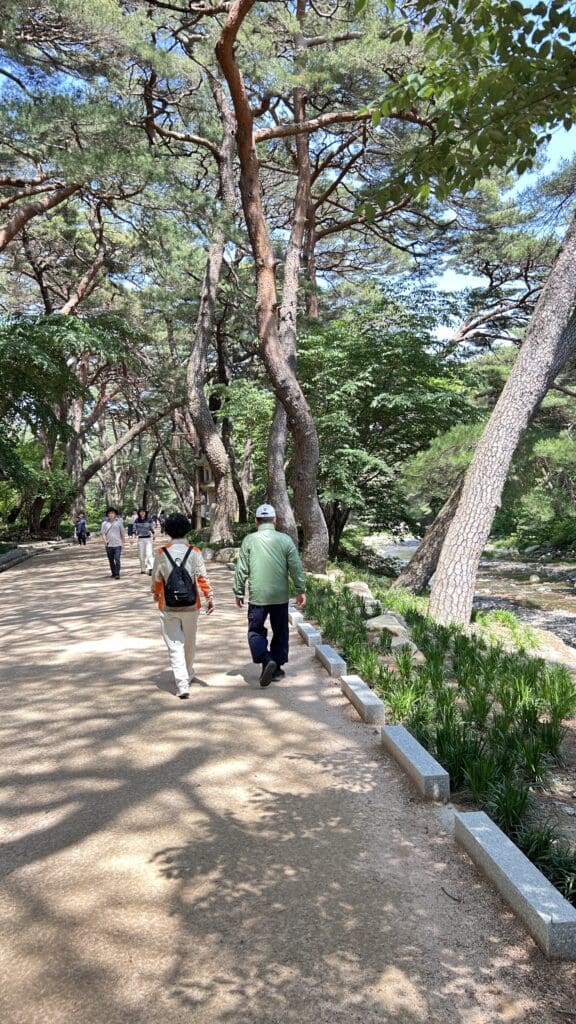
The avenue of trees
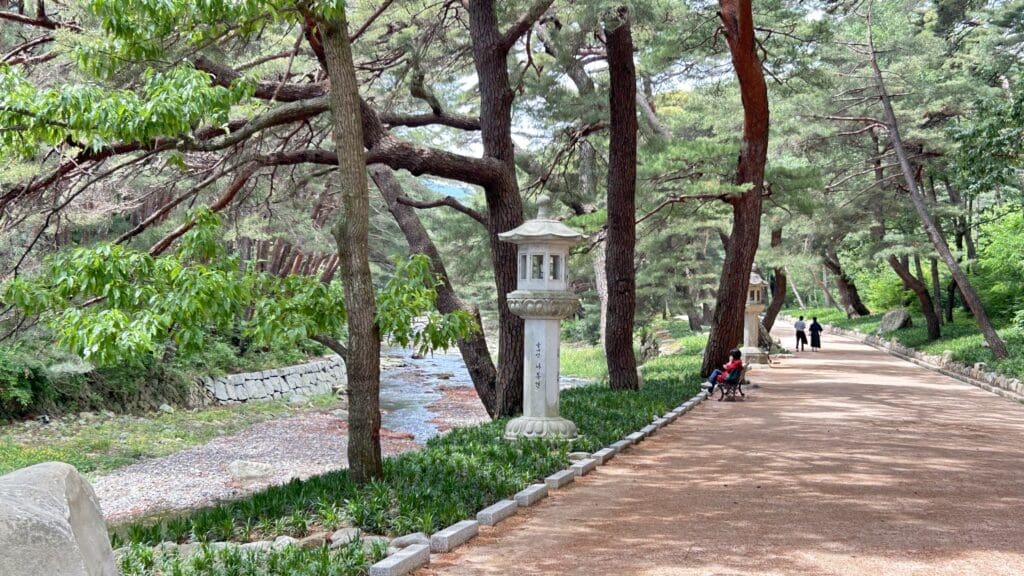
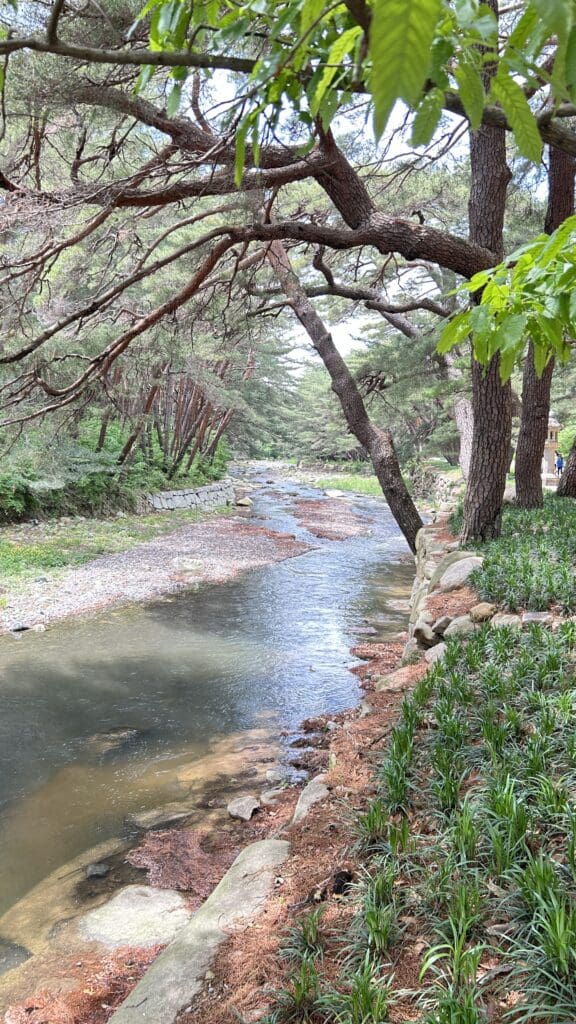
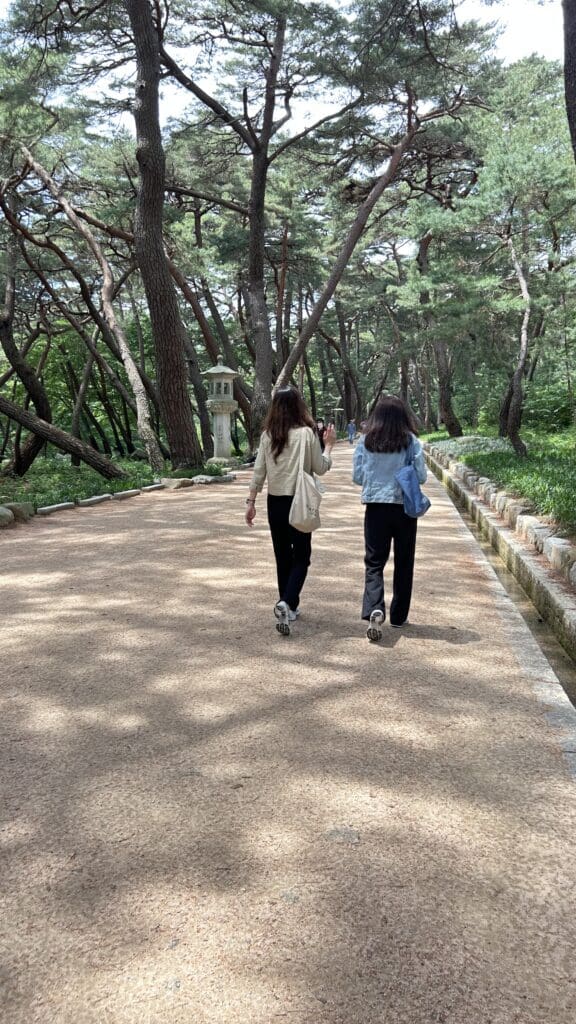
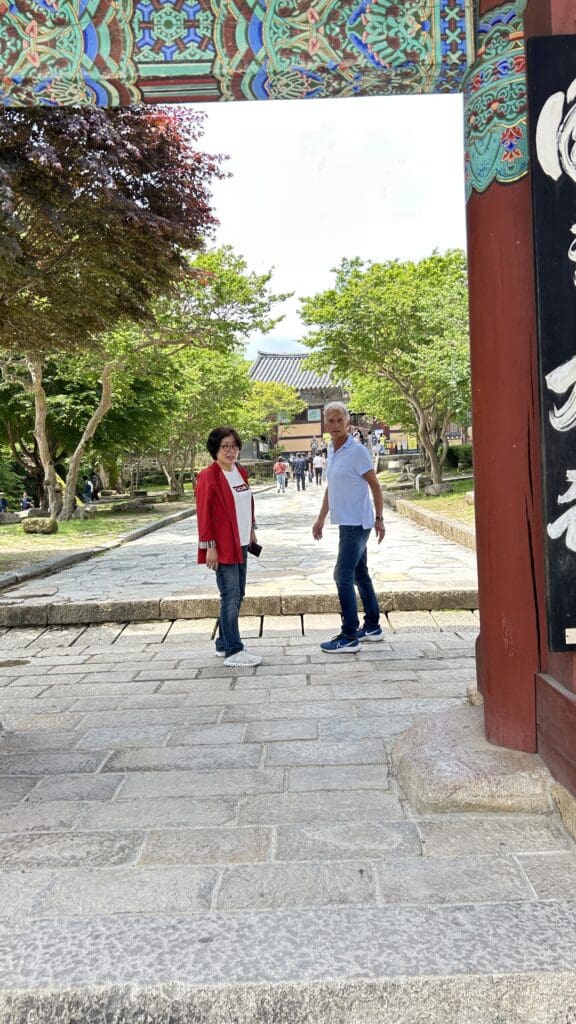
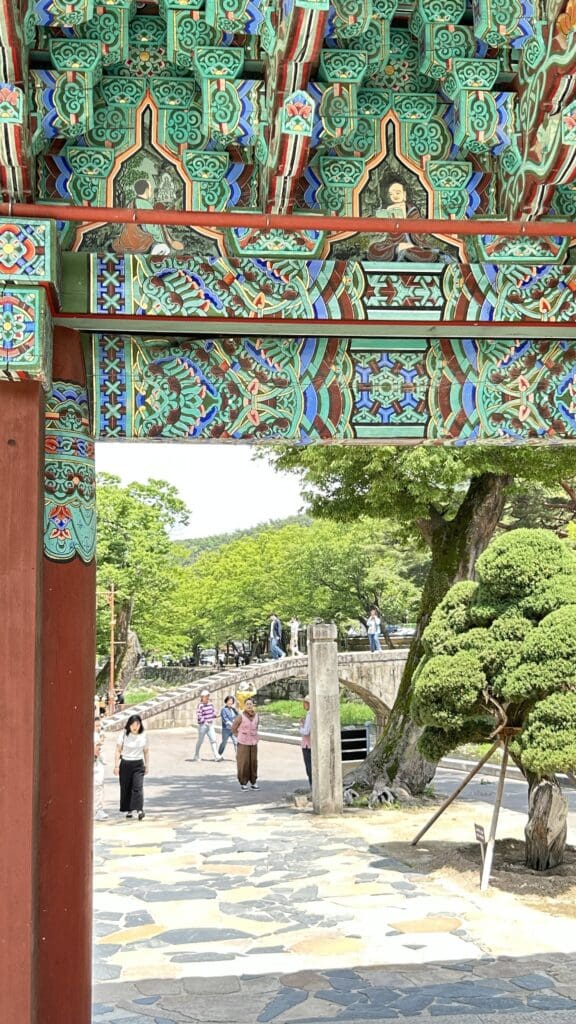
The road leading into Tongdosa already sets the mood. A long avenue of old pine trees, now on the UNESCO World Heritage list, lines the way. Their twisted shapes, the shade they give, the play of light and shadow — it feels like they slowly prepare you for what lies ahead. As if the trees themselves are guardians of the transition from the everyday world to a sacred one.
The guardians at the gate
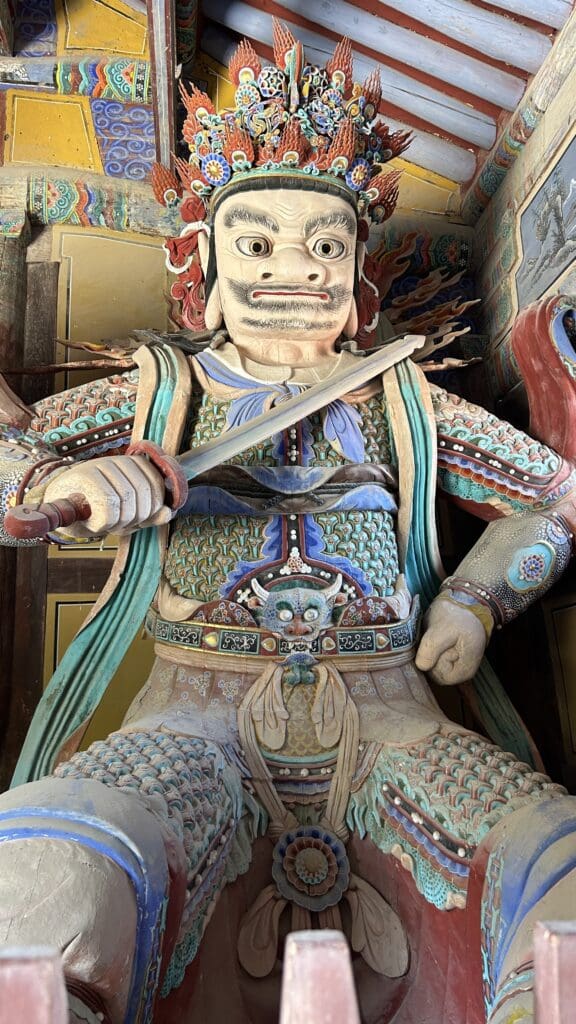
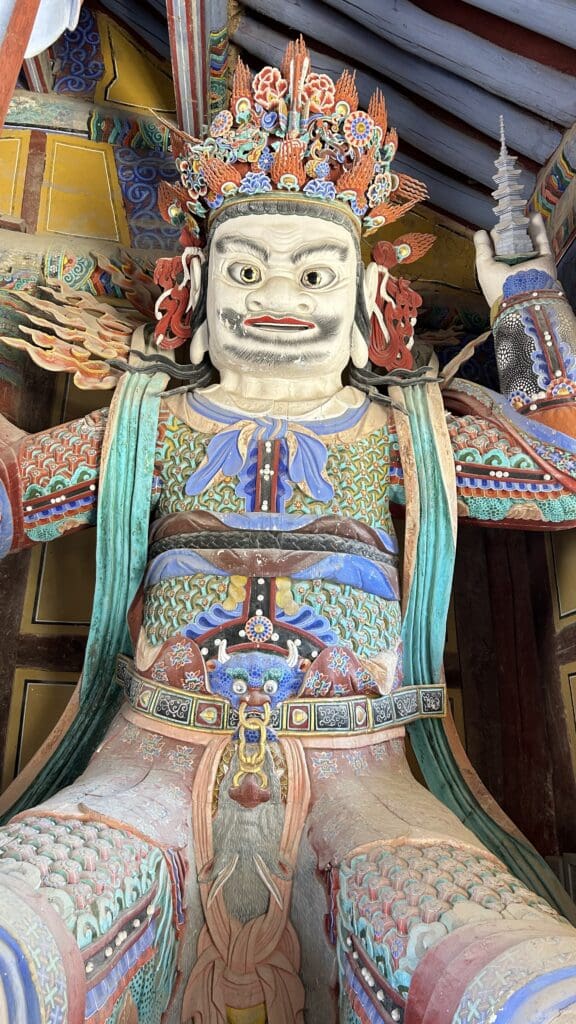
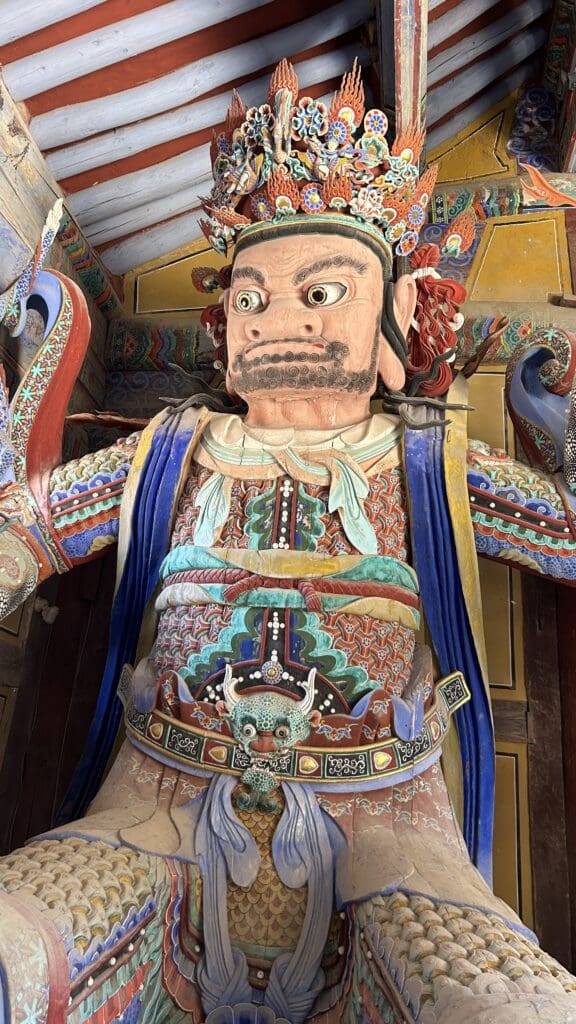
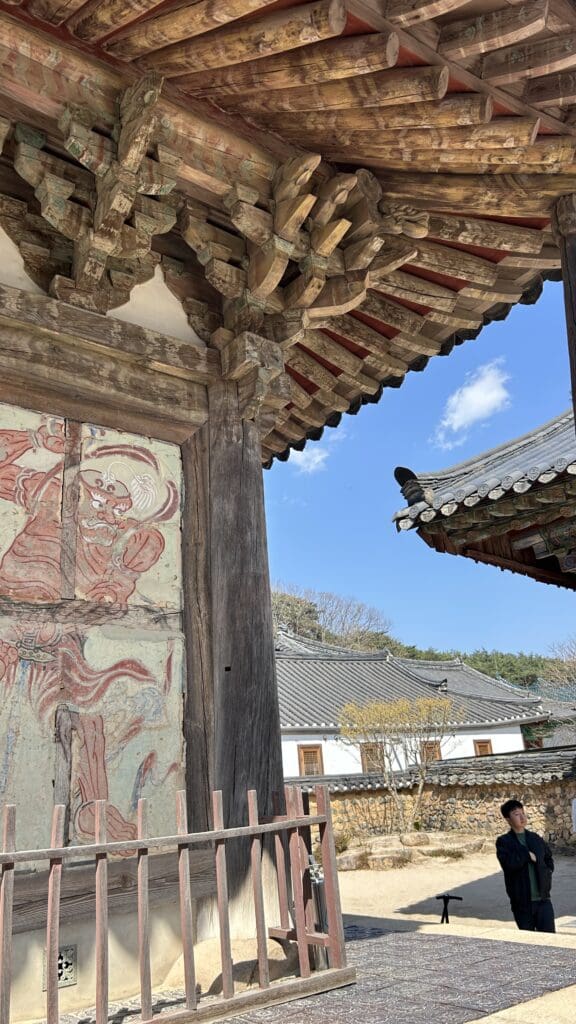
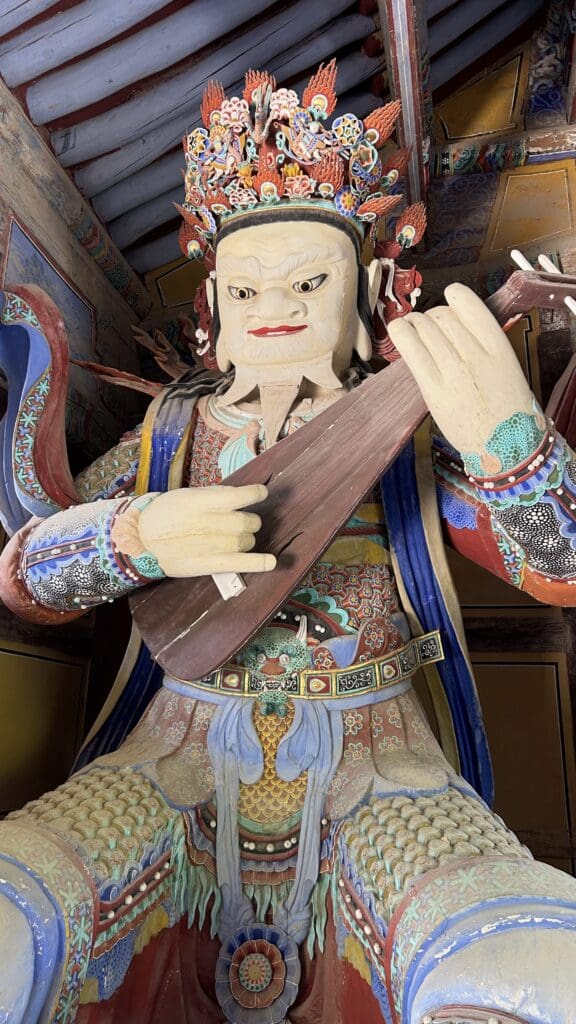
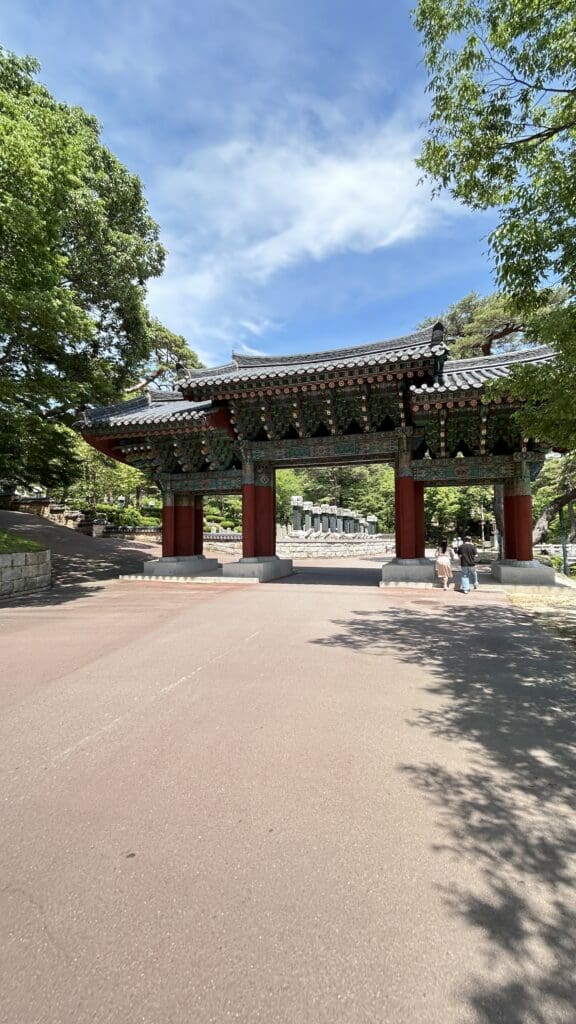
Before you reach the inner sanctuary, you meet the Four Heavenly Kings. These huge, colorful statues are guardians of the four directions:
- One holds a sword, to drive away evil.
- One a lute, symbol of harmony.
- One a pagoda, protecting the Buddhist teaching.
- One a spear or dragon, symbol of strength.
Their fierce eyes and strong posture may look frightening, but their task is to protect the temple and those who enter it. They remind you: this is holy ground. I noticed that visitors often stop for a moment. Some bow, others just stare quietly. I also felt that sense of crossing into another world.
Wooden faces – jangseung
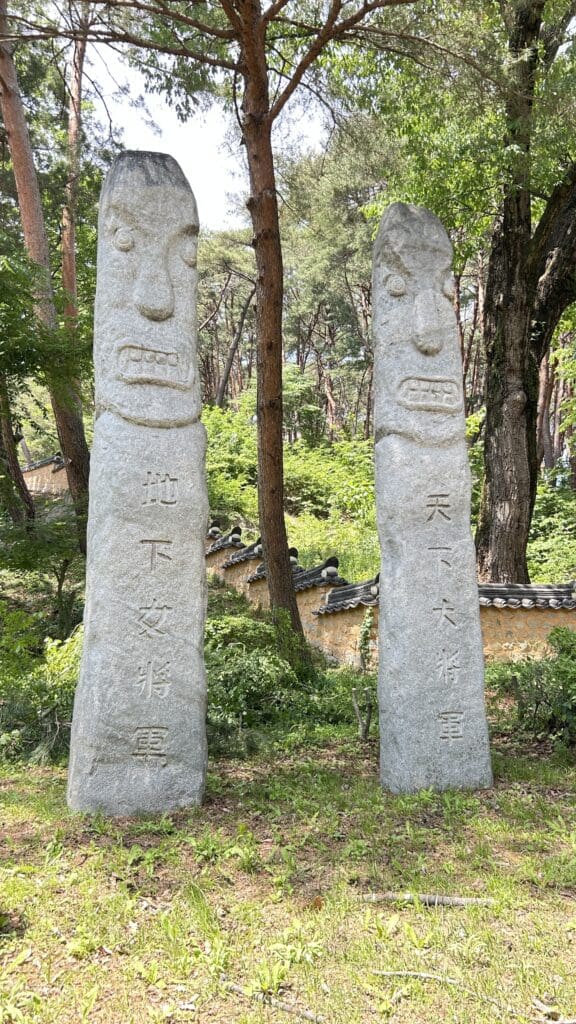
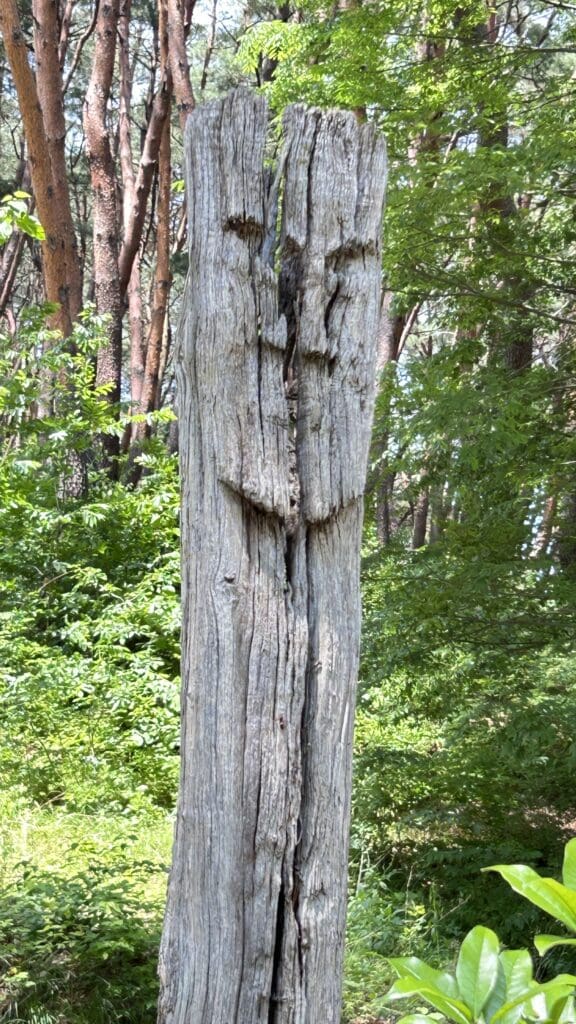
Not all guardians look so powerful. Along the path we also saw a wooden pole with a carved face — a traditional Korean jangseung. These totem poles once stood at village entrances, keeping away bad spirits and giving travelers protection. The one I saw looked weathered but still had a cheeky smile. Almost as if it whispered: “Welcome in, but show respect.”
That mixture of solemn and playful is very typical of Tongdosa. It’s not just about rules and rituals. It’s also about warmth, humanity, and little details.
The great bell
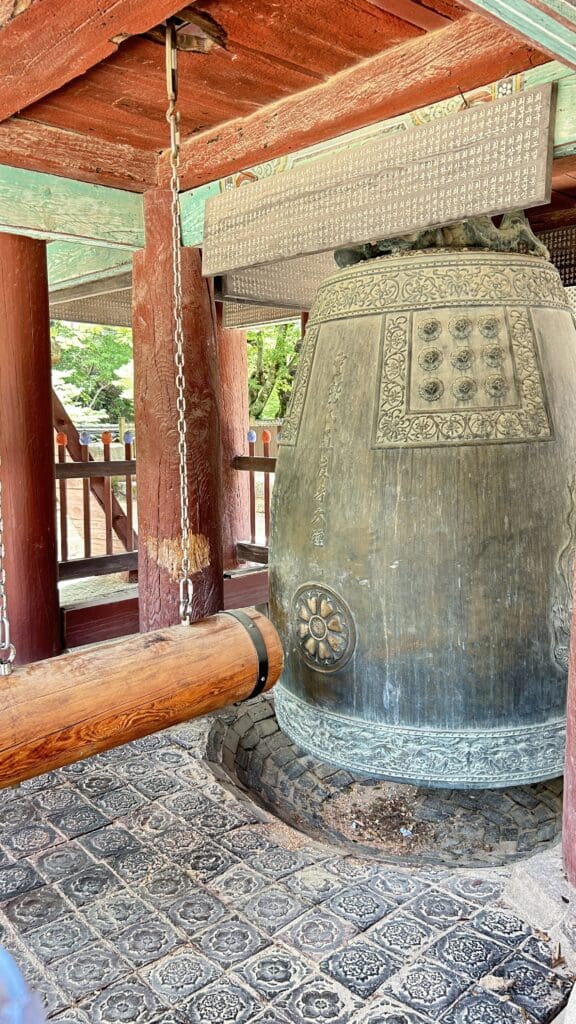
In an open pavilion stands a huge bronze bell. Next to it hangs the heavy wooden beam used to strike it. I didn’t hear it ring that day, but I can imagine the sound rolling through the valley, shaking the ground and echoing into the mountains. On the surface of the bell you can still see the engravings and worn marks of centuries of use.
Mountains in the background
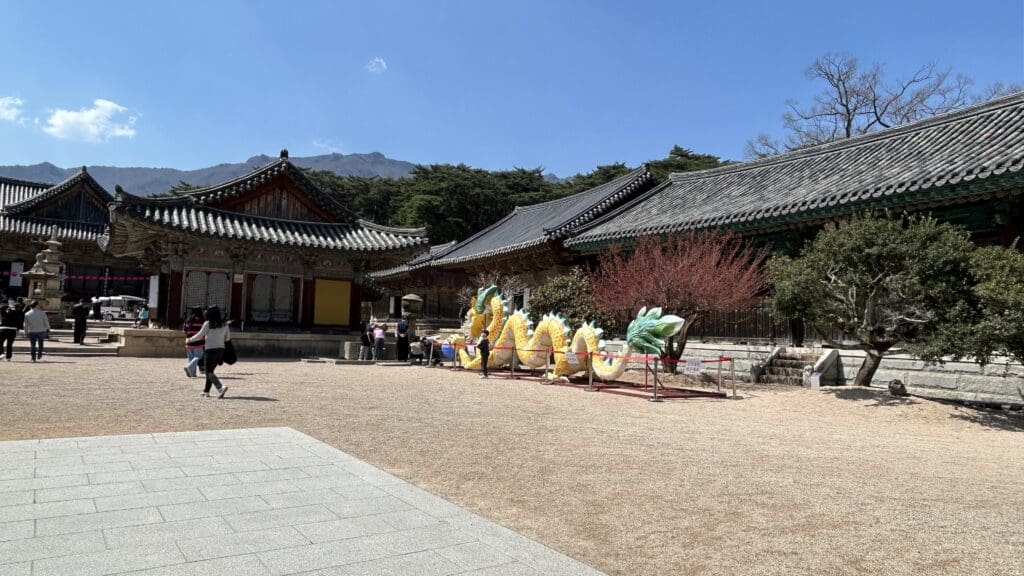
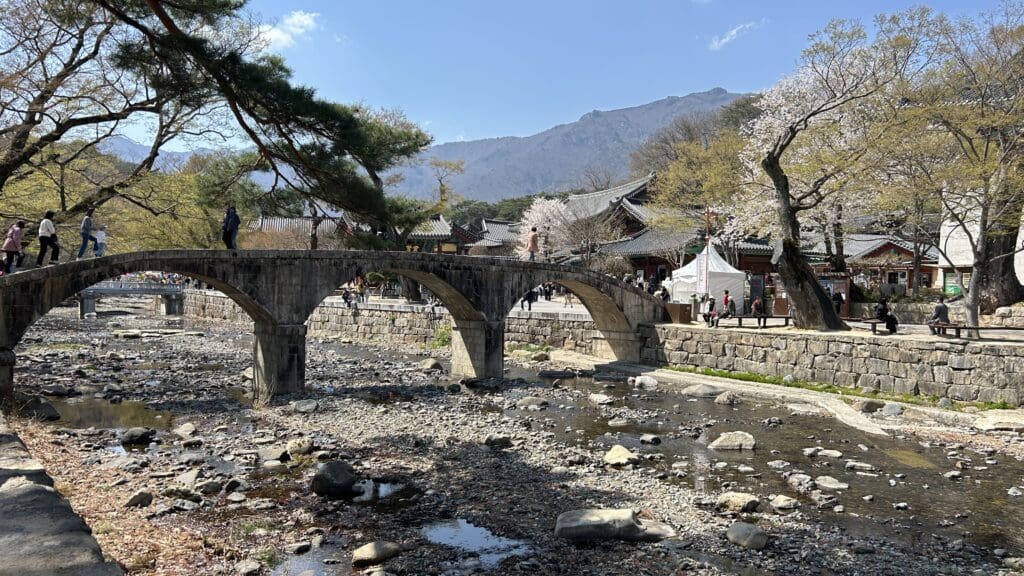
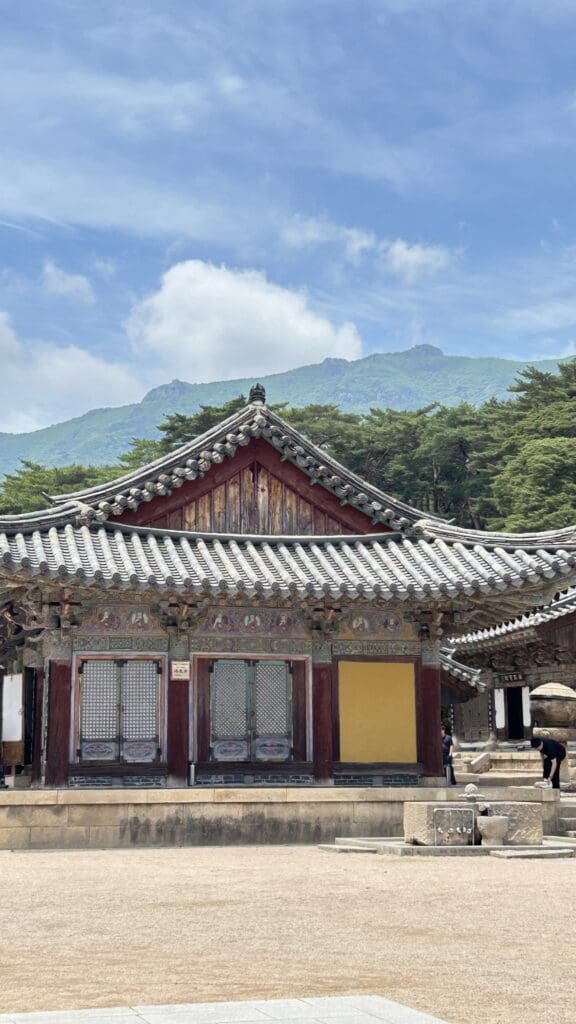
And then, suddenly, between the buildings, you see the Yeongchuksan mountains rising in the background. They give Tongdosa a natural setting that is as much part of the temple as the pagodas and statues. The mountains stand there like silent companions, sometimes wrapped in mist, sometimes sharply against the blue sky.
Different kinds of Buddhism
There are many forms of Buddhism. In Thailand or Sri Lanka, you find Theravāda Buddhism, focusing on the earliest teachings. In Tibet, Vajrayāna Buddhism, with colorful rituals and symbolism. In Korea, as in China and Japan, it is mainly Mahāyāna Buddhism, the “Great Way”, which emphasizes compassion and salvation for all beings.
Do they worship the same Buddha? Yes. Always Siddhartha Gautama. The images, the rituals, the guardians may differ, but the heart is the same: overcoming suffering, finding peace, living with kindness. Tongdosa expresses this Korean way of Buddhism beautifully: it is open to monks, but also to ordinary families who come to pray, remember ancestors, or simply walk quietly among the trees.
Why Tongdosa is special
Tongdosa is almost 1,400 years old. It has been recognized by UNESCO, but more importantly, it is still alive. Monks chant, families bring offerings, the bells still ring. It is not a museum — it is a living place of faith and memory.
For me, what makes Tongdosa unforgettable is the mix of grandeur and intimacy. On the one hand, a temple of world importance with relics of the Buddha. On the other hand, small moments: a smile in a wooden pole, a shadow under a pine tree, the distant sound of a bell.
An invitation
I realized as I walked there: you can’t really understand Tongdosa from books or photos. You need to be there. To feel the trees above you, to look the guardians in the eye, to breathe the mountain air and hear the silence.
If you come to Busan, don’t stop only in the city. Go to Tongdosa. And if you like, we’ll gladly take you there. Because this is exactly what we love to share during our Private Tours Busan — places that are not only seen with your eyes, but also felt in your heart. 🌿