
I’ve e just celebrated my first birthday in Korea. — and it was different from what I’m used to. But it was special all the same: my first in-the-family birthday here in Busan.
About beef, cake, and why birthdays are different here
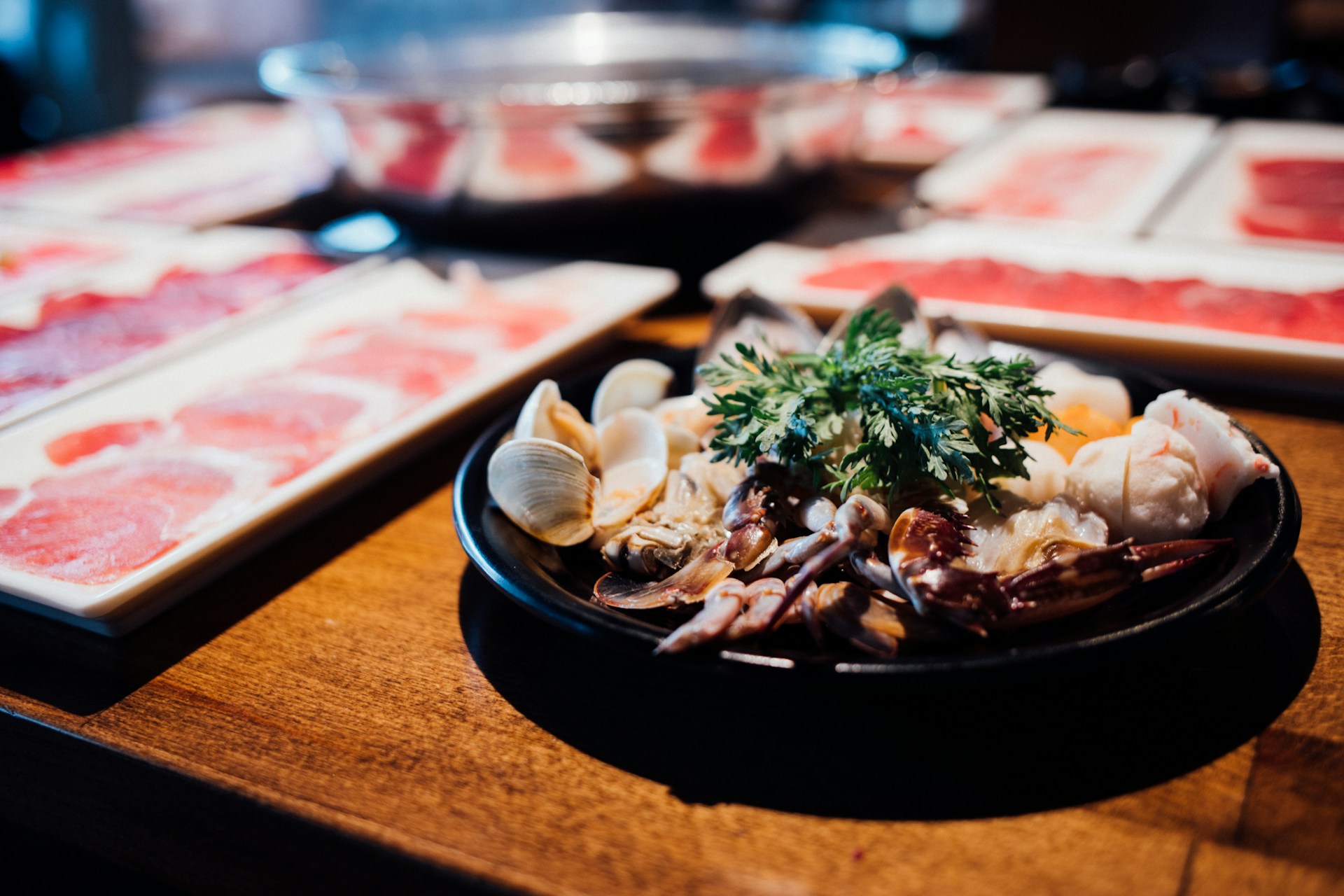
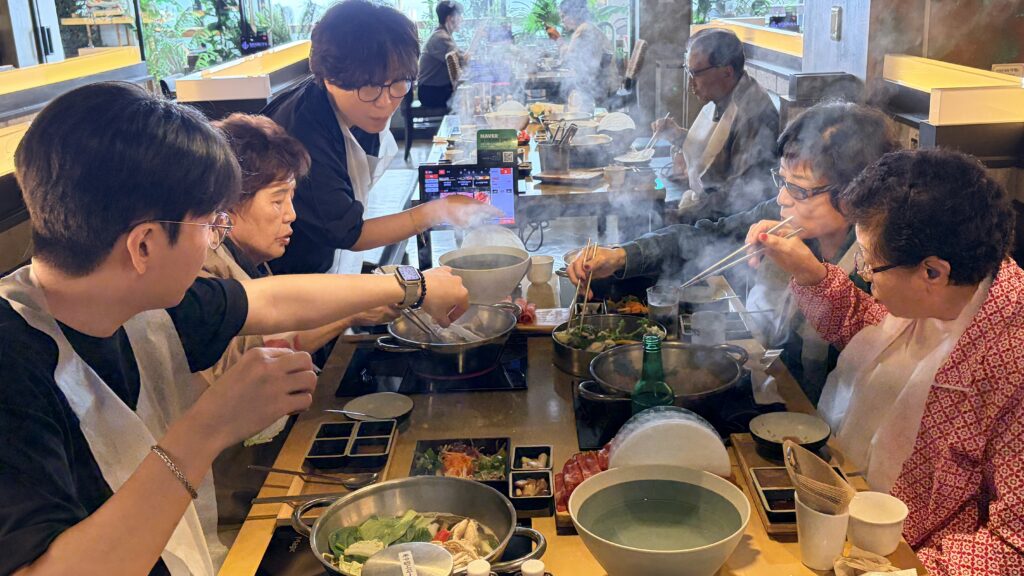
We went out for dinner with eight of us at Shabuya, a restaurant in Haeundae famous for its shabu-shabu. And that’s no ordinary meal. On the table are pots of boiling broth where you cook your own vegetables, mushrooms, and paper-thin slices of Hanwoo beef — Korea’s pride. Hanwoo is tender, rich in flavour, and, according to many, even better than wagyu.
The dish has quite a history. It most likely started in Mongolia, where nomads cooked meat in broth over an open fire. From there it spread through China and reached Japan, where it got its name: shabu-shabu, an onomatopoeic word mimicking the sound of meat being swished through hot water — shabu, shabu….
In Korea, the dish took on a life of its own. The broth became richer, the sauces spicier, and the beef top-quality. A proper Korean shabu-shabu also includes plenty of vegetables, tofu, noodles and sometimes rice. It’s a real team effort — everyone cooks, serves, and eats together. In fact, it’s less “having dinner” and more “sharing a small cooking project.”
That’s what I like about it: eating together really means doing something together. Nobody sits back; everyone takes part. It’s social, a bit chaotic, but always fun.
Candles, flowers, and a short speech
Just before dinner started, a box appeared on the table — a cake, with candles. Nara’s uncle and aunt had brought it, together with a small bouquet of flowers, neatly wrapped as is the custom here. The candles were lit, a short song was sung, and I blew them out.
Then I gave a brief speech — thanking everyone for coming, saying how special it felt to celebrate my first family birthday in Korea, and adding that I hoped next year I’d be able to say it in Korean. There was laughter, applause, and a few encouraging words I half understood but completely appreciated.
Then the real cooking began. The table was full, the beef was perfect, and steam was everywhere. Nara was chatting with her aunts while keeping an eye on everything — making sure more vegetables and meat were being brought in. My mother-in-law sat at the first table, quietly enjoying herself, while her grandson kindly accompanied and supported her.
Cake, coffee, and envelopes
After dinner the cake came back, now with coffee. There was laughter, small talk, and the relaxed kind of atmosphere that follows a good meal. Then came the presents. From the aunts and my mother-in-law came the traditional white envelopes with money, and from my uncle and aunt the flowers and the cake.
In Korea, gifts are usually practical: luxury fruit boxes, skincare sets, clothes, or money. What you receive, you’ll later return in a similar way — not as a rule, but as a friendly form of reciprocity.
A bit of history
In the Netherlands, birthdays are almost sacred. Everyone has their own day, their own cake, their own moment. You get older by exactly one year and celebrate that with friends, coffee, and careful planning. It feels natural, but it’s actually a fairly recent tradition.
A few centuries ago, hardly anyone celebrated their birthday. Ordinary people often didn’t even know their exact birth date. Only kings, churches, and the upper classes kept such records. It was only in the 19th century, with the rise of modern individuality, that the “personal birthday” became a thing.
In Korea, things developed differently. The focus was never on the individual but on the group — the family, the generation. People didn’t celebrate the day of birth but the age. Everyone became a year older on New Year’s Day, not on their personal birthday. And newborns were already considered one year old at birth.
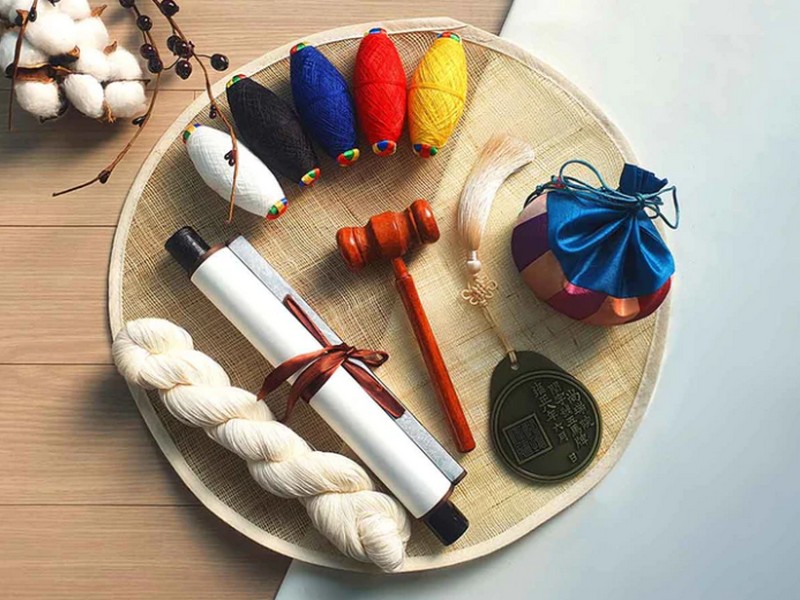
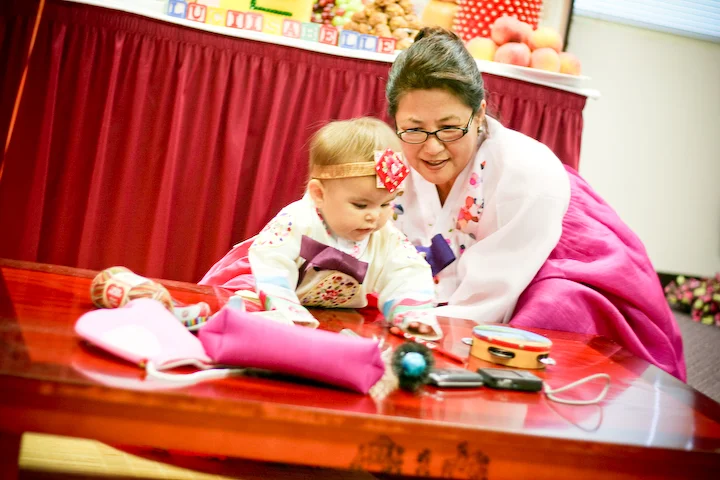
The first birthday, or doljanchi, was (and still is) a major celebration — historically a celebration of survival, as infant mortality was once high. A baby would be placed in front of symbolic objects like a pen, coins, or thread, to predict their future. After that, birthdays weren’t a big deal again until the 60th, the hwangap, marking the completion of a full lunar cycle.
Only after the Korean War and the Western influence of the 1960s and 70s did the birthday as we know it — with cake, candles, and your own date — become common. Today’s younger generation might celebrate in cafés with cream cake and Instagram photos, but for many families, birthdays are still less about me and more about us.
That probably explains why Korean birthdays feel more relaxed and spontaneous. In the Netherlands, everyone waits until the coffee and cake are perfectly timed; here, things just happen naturally.
A walk by the sea
After the meal we went for a short walk along Dalmaji-gil, a narrow park overlooking the sea. The sky was grey, the wind gentle. My mother-in-law walked arm-in-arm with Donggyu, while Nara strolled ahead chatting with her aunts. It was calm and friendly — nothing spectacular, but just right.
Different, sometimes tricky, but very special
What struck me was how pleasantly — but also a bit chaotically — everything flowed. Nobody asked, “When do we cut the cake?” or “Who goes first?” At one point I thought, “Shouldn’t we wait with putting the meat in the pot until everyone’s here?” But no — the food was ready, so we simply started. Things just happened. And that, I think, says a lot about Korea: less about strict timing, more about enjoying the moment together.
At the same time, Korean society still has many layers of politeness — in language, gestures, and social behaviour. You constantly express respect through how you speak, pour a drink, or address someone older. So even when things seem relaxed on the surface, there’s still a quiet awareness of hierarchy and courtesy everywhere.
I sometimes find that contrast confusing. My Dutch sense of order and directness runs deep. Now and then I feel that little protest inside — the voice that says, “That’s not how it’s supposed to go.” Those are the moments I realise I’m still adjusting, still learning to be comfortable with different cultural rhythms.
But honestly? I also find it beautiful. And above all, incredibly valuable.
Being included like this in Nara’s family — with cake, flowers, envelopes, and laughter — is something I don’t take for granted. It means a lot.
Next year? Absolutely. Same place, same steaming pots, same cheerful crowd — and hopefully a few sentences in Korean from me.