
South Korea news update October 2025.
After a vacation of almost four weeks in the Netherlands and the UK — inspiration, fun, visiting family and fiends and the clear-headed air of home — I’m back in Busan. sea sounds the same, but the country has moved on at full speed. Time to reconnect and pick up where we left off: following what’s happening in education, business and tourism in South Korea.
As always, this overview is for readers who want to spot opportunities in this dynamic country — or simply want to understand it better.
By the way: If you’d like to stay up to date, subscribe to my weekly blog. That way, you won’t miss any of the stories, trends and ideas that make Korea so fascinating.
Education: international growth and internal challenges
Korea’s higher education sector is in transition. The number of international students recently passed a record 210,000 enrolments, while domestic student numbers continue to fall. Universities are turning to global partnerships and English-taught programmes to fill classrooms and diversify their campuses.
Yet there’s a tension between ambition and execution. Many students still struggle with language skills, and not every university has enough qualified English-speaking professors. That’s where foreign cooperation can make a real difference — in joint degrees, exchange programmes, and education technology that bridges East and West.
Korea University’s business school was recently re-accredited by AACSB, underlining the country’s determination to meet international standards.
Business and innovation: visas, supply chains and AI momentum
The Korean government continues to position the country as a hub for innovation and high-tech collaboration. A major step this autumn is the launch of the K-STAR visa, designed to attract world-class researchers and engineers to the Korean STEM ecosystem.
At the same time, Korea and India announced new initiatives for cooperation in electronics, EV components and digital supply chains — signalling broader Asian integration and potential openings for European partners in logistics, clean energy and manufacturing.
And then there’s AI. OpenAI has opened its first office in Seoul, making Korea the largest paying ChatGPT market outside the United States. It’s a milestone that confirms how quickly artificial intelligence is entering Korean business and daily life — and a field where Dutch innovation could easily find a foothold.
Busan in the spotlight: film, tourism and the “night economy”
My home city Busan has had a vibrant few weeks. The 30th Busan International Film Festival (BIFF) in September brought international guests and new energy to the city’s creative scene. Tourism numbers are soaring: more than 3 million foreign visitors are expected by the end of the year.
The local government is investing heavily in coastal trails, cultural events and a new wave of night-time tourism initiatives that combine K-culture, light, music and the sea.
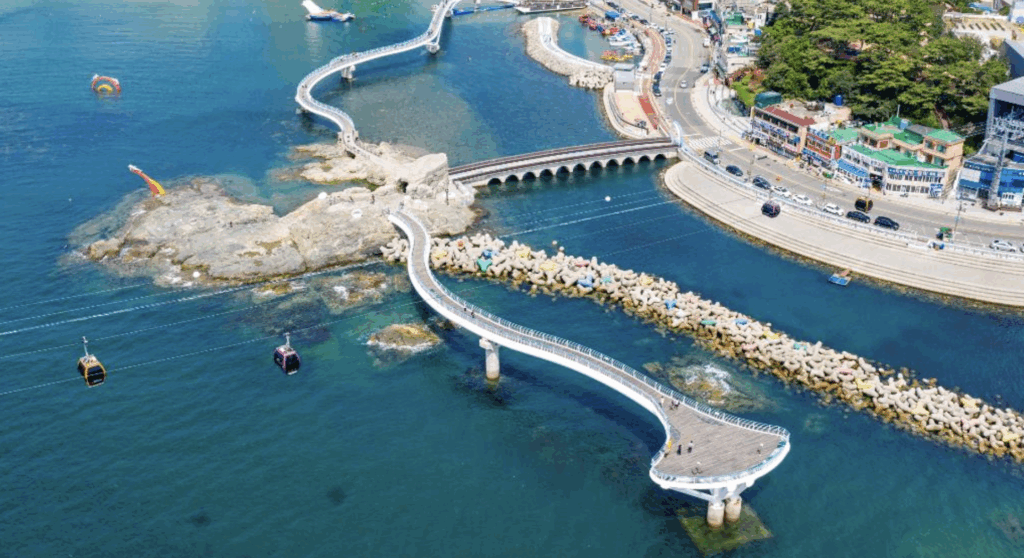
Places such as the Oryukdo Skywalk — a walkway above the ocean — are trending across social media, helping Busan grow into a destination that competes directly with Seoul.
For investors, travel companies and entrepreneurs in hospitality, Busan is becoming one of the most promising cities in Korea to step into. The Expo dream may have slipped away, but it seems to have turned into a new form of ambition and pride.
Beyond business: social and policy debates
Meanwhile, the national conversation continues. There’s growing debate about digital distraction and phone use in schools, with new rules possibly banning mobile phones in classrooms. At the same time, ideological influences in education are being questioned, showing how deeply Korea reflects on the values behind its rapid development.
And the demographic challenge remains: Korea still has the world’s lowest birth rate. Policies to attract skilled migrants, such as the K-STAR visa, are part of a broader attempt to keep the economy vibrant in the face of population decline.
Closing thought
To follow Korea is to watch a country in constant motion — balancing innovation with reflection, ambition with self-criticism. That makes it not only an exciting place to live, but also a valuable partner for anyone looking to connect Europe and Asia in smarter, more human ways.
In the coming weeks I’ll dive deeper into each of these topics — from AI and higher education to tourism and entrepreneurship.
👉 Subscribe via kramerconsult.kr to receive each new post directly.
Sources: QS.com, Korea Herald, Korea JoongAng Daily, The Economic Times, Times of India, Business Insider, Reuters, Le Monde, EIN Presswire, Stripes Korea, Wikipedia