
Do we have “crying horses” in the Year of the Horse?
Lunar New Year in 2026 falls on Tuesday, 17 February 2026, and it marks the start of the Year of the (Fire) Horse.
Lunar New Year is often explained to outsiders as “a big holiday in Asia.” That’s true, but it misses what many people actually feel around this time of year.
For a lot of families in East Asia, Lunar New Year is a yearly reset: you close the old chapter, you return to your roots (literally and emotionally), you eat the foods that “belong” to this season, and you step into the next year with a mix of hope and realism. It’s celebration, yes—but also reflection, pressure, nostalgia, and sometimes awkward family conversations that you don’t have the rest of the year.
So when a small plush horse in China suddenly became famous because it looked sad, it wasn’t just a funny internet moment. It was a surprisingly honest symbol of what many people carry into a “new beginning.”
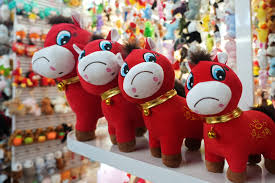
The horse that wasn’t smiling
In Yiwu, one of China’s best-known wholesale trading hubs, a red Lunar New Year horse plush was produced for the seasonal market. A small stitching mistake turned the intended smile into a frown: the mouth was sewn on upside down. Instead of cheerful, the horse looked disappointed—almost exhausted.
According to reporting, the toy went viral and sold extremely well. It was sold at Yiwu International Trade City by a shop owner named Zhang Huoqing, who runs a shop called “Happy Sister.” She initially offered refunds, but demand surged when people began asking specifically for the “crying horse.” Some buyers linked the toy’s expression to workplace pressure and the feeling of having to “keep smiling” while simply trying to keep up.
That last part is what makes the story relevant for Korea too—not because Korea is “the same,” but because the Year of the Horse will be discussed across the region as a year of momentum, ambition, and movement. And in fast-moving economies, the line between momentum and pressure can be thin.
Lunar New Year: what it really means to people
It’s a return—socially, not just geographically
In China and Korea, Lunar New Year is strongly tied to the idea of return. People go back to family, back to elders, back to the “home table.” Even when someone has built a completely modern life elsewhere, this season pulls them back into older structures: respect, hierarchy, family expectations, family pride, family worries.
That matters for business because relationships are not “soft culture” in East Asia. They are part of the operating system. Lunar New Year is the time when that operating system becomes visible.
It’s a moment when timing becomes emotional
Many people try to clear things before New Year: finish tasks, settle payments, reduce conflict, clean the house, and remove bad “leftovers” from the past year. Symbolically, it’s cleansing. Practically, it’s psychology: when people believe they’re starting clean, they behave differently.
As an entrepreneur, you don’t have to “believe in luck” to understand that a shared reset can change buying behaviour, decision-making, and the willingness to take a new direction.
Do people really believe in the power of the symbols?
This is where Western readers often oversimplify.
Some people believe strongly—seriously. Others see it as tradition. Many do a bit of both: they may not claim deep belief, but they still participate because it is a shared social language. And in a society, shared social language has power even if individuals interpret it differently.
So yes—sometimes it’s faith. Sometimes it’s family etiquette. Sometimes it’s “I don’t believe it, but I don’t want to disrespect my parents.” And sometimes it’s simply a culturally accepted way to talk about the future: “This year should be better—let’s plan it right.”
China vs Korea: the same New Year, a different atmosphere
China: Spring Festival as a long public season
In China, Lunar New Year is widely framed as the Spring Festival, a very large public season that combines family reunion, a strong gift economy, heavy travel, and public decoration. It’s not only private life—it’s visible everywhere. Lantern festivals are part of that public atmosphere, and media attention around the season is huge.
From a business perspective, it is also a national-scale logistics and consumer cycle: lead times, shipping delays, factory pauses, and a very clear before/after rhythm.
Korea: Seollal as concentrated family ritual and respect
In Korea, Seollal has a different feel. It is often more inward, family-centred, and ritual-based: family gathering, traditional greetings, and symbolic foods (notably tteokguk). You see less “public spectacle” than in parts of China, but the family pull can be intense—and availability drops quickly around the core days.
For entrepreneurs, the practical takeaway is simple:
- In China, the season often feels longer and more publicly “everywhere.”
- In Korea, the holiday period can be shorter, but the family focus is strong and business calendars shift sharply.
Either way: it’s not a footnote. It’s a real operational event. Plan around it.
Year of the Horse: what people hear when they hear “Horse”
The Horse is widely associated with energy, movement, ambition, and speed. In everyday conversation, “Horse year” often becomes shorthand for:
- a year when things move quickly,
- a year for taking action,
- a year of travel, change, and bold decisions.
And that is exactly why the “crying horse” went viral: it undercut the glossy version of that message. It quietly reminded people: speed has a human cost.
You can laugh about it, but you can also read it as market insight: people want progress, but they also want realism. Even in celebration, they recognise pressure.
The reality check: what kind of “new year” might business expect in Korea in 2026?
I’m not an economist, so I won’t pretend to forecast Korea. But we can look at a few credible signals and translate them into entrepreneur language.
1) The macro picture looks “moderate,” not magical
Several mainstream outlooks for Korea describe a moderate-growth environment rather than a boom year. What that usually means for founders and investors:
- Korea can be a great market, but it’s rarely an “easy wins” market.
- Competition is serious.
- Buyers (B2B and B2C) are sophisticated.
- You need a clear reason to exist in the Korean market—quality, differentiation, trust, or a very specific niche.
2) Korea’s mood is strongly influenced by exports and the tech cycle
Even if you don’t sell chips, Korea’s broader confidence is tied to export performance and global tech demand. When confidence is mixed, buyers become selective:
- “Nice to have” gets delayed; “must have” gets funded.
- Proof and credibility matter more: references, clear outcomes, local fit.
3) Geopolitics is not daily panic—but it is part of the investment landscape
Korea always sits in a geopolitical context that can influence sentiment quickly: North Korea risk, alliance posture, and wider U.S.–China competition affecting trade and technology rules.
A practical approach is not fear—it’s planning:
- don’t build a model that collapses if policy shifts,
- reduce single-point dependency in supply chains where possible,
- keep compliance and documentation clean,
- and avoid assuming today’s trade rules will always stay the same.
So what does a “Horse year” look like for entrepreneurs in Korea?
If I had to summarise 2026 in one line, based on what I see and what the sources suggest:
Korea may reward well-prepared speed—and punish rushed speed.
That is actually a very “Horse year” message: momentum is powerful, but only if you’re on the right road.
What tends to work for foreign entrepreneurs entering Korea
- Local problem fit: not just a translated European idea, but something that solves a Korean buyer’s real pain point.
- Local credibility: a partner, distributor, or advisor who can open doors and prevent avoidable mistakes.
- Trust-building discipline: consistent follow-up, responsiveness, and respect for relationship dynamics.
- Detail excellence: service, aftercare, tone, UX, packaging, documentation—Korea notices details.
- A realistic timeline: including holiday cycles, approval cycles, and the reality that meetings don’t always mean decisions.
What tends to fail (or becomes unnecessarily expensive)
- “We’ll figure it out once we’re there.”
- Underestimating how fast competitors react once something looks promising.
- Overestimating early sales without investing in local proof and local trust.
- Treating culture as a marketing layer rather than an operational reality.
A modest closing note
Lunar New Year is not only decoration. It is a collective reset—followed by a collective push forward. The Year of the Horse symbolism captures that: movement, action, ambition. The “crying horse” adds something modern and useful: honest recognition of pressure.
If Korea is on your radar for 2026—launching, expanding, investing, building partnerships—and you’d like a practical sounding board, we can help in a modest, concrete way: local market research, partner search, introductions where possible, and boots-on-the-ground perspective—so your plan is based on reality, not assumptions.
Sources (background reading)
- Reuters — “Accidental ‘crying horse’ toy wins hearts in China” (Jan 26, 2026). (Reuters)
- Reuters — “Chinese lantern festival lights up for Lunar New Year” (Jan 24, 2026) (includes Lunar New Year date: Feb 17, 2026). (Reuters)
- Smithsonian Institution — “2026: Year of the Horse” (Fire Horse framing; Feb 17, 2026 start). (Smithsonian Institution)
- Korea.net — “Festivals, Celebrations, and Holidays” (Seollal overview; tteokguk/charye mention). (Korea.net)
- OECD — Korea chapter, OECD Economic Outlook, Volume 2025 Issue 2 (Dec 2, 2025) (macro outlook for 2026). (OECD)
- Reuters — “South Korea economy unexpectedly contracts in Q4, but AI boom brightens outlook” (Jan 21, 2026). (Reuters)
- Reuters — “US, South Korea agree to deepen cooperation on nuclear-powered subs, Seoul says” (Jan 26, 2026). (Reuters)