March 1 in Korea: flags, a free Monday… and suddenly I’m thinking of Tehran
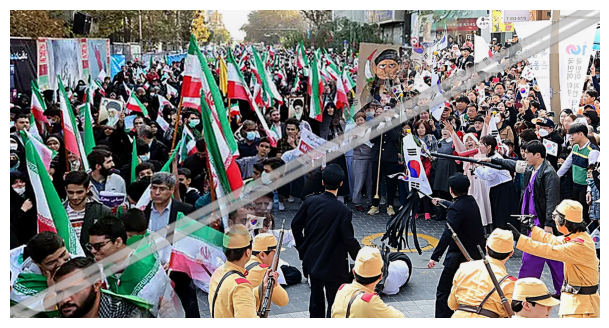
This morning I stepped outside for a bit and I noticed it right away: more Korean flags than usual. On balconies, in front of small shops, on public buildings. Not in an overly “party” kind of way—more like… present. As if the country is quietly saying: we don’t forget this.
And because March 1 falls on a Sunday this year, there’s a practical bonus: Monday, March 2 is a day off for many people. Sounds pretty nice (and honestly: it is), but it also creates the same confusion every year: “Oh, so Korea is celebrating Independence Day.”
Only: not quite.
March 1 here is 삼일절 (Samiljeol). It’s not “the day Korea became independent,” but the day Koreans, in huge numbers, stood up and said: we want to be free. That was March 1, 1919, during the Japanese occupation. It started with a declaration of independence, and before you knew it the whole country was moving. People shouted “만세!”, walked together, listened, joined in. And yes—it was met with harsh repression. So this isn’t a soft, feel-good piece of history. This is the kind of history where families still carry stories. And if you live here, you sense that it still vibrates under the surface.
That’s why I find Samiljeol such a special day. It’s not about “we won,” but about: we made ourselves heard. That’s different. Maybe even deeper.
And then… this afternoon I picked up my phone. Just to check the news. And suddenly my head wasn’t with those flags in Korea anymore—it was in Iran.
I read about the horror, the protests, the crackdown, the situation that has long stopped being “political news” and has become plain human tragedy. And now, in just a few days, it seems to have escalated even further: strikes, retaliation, the looming threat of a bigger war. You read it and you think: how does a country ever find its way back to calm from here?
But what struck me most was something else. In between fear and chaos, I also saw reports of something almost impossible to process: that in and around Tehran there were moments—brief, fragile—of relief. Shouts from windows, car horns, fragments of “maybe something will change.” Not because war is good. But because some people have been trapped for so long that even a dangerous break can feel like a crack of light.
And that’s where Samiljeol came back to me.
Not because Iran and Korea are the same. They’re not. Not at all. But because there’s one human thread I can’t ignore today:
When freedom isn’t a given, symbols start to matter. “Together” starts to matter. The street starts to matter.
In Korea you see it today in flags and in a remembrance day that everyone knows. Calm, organized, almost taken for granted. And precisely because of that, you realize: this comes from somewhere. This was built on pain, resistance, pride, loss—everything mixed together.
And maybe that’s also why March 1 still matters here, even for younger people. Sure: for many, it’s also simply a day off and a long weekend. But the story is still in their heads. In school, in films, in families, in the street view. It’s not something you “like.” It’s something you carry.
What can we take from it? I’ll keep it small, because big lessons quickly start to sound preachy. But this is what I’m carrying with me today:
That remembering isn’t only looking back—it’s also a kind of maintenance of your dignity.
That a day off can feel light and still carry a heavy story.
And that hope sometimes shows up in the strangest places—even when you think only fear should be possible.
Tonight I’ll see those flags again, hanging here. And I know: for many people it’s “just” Samiljeol.
But if you pause for a second, you get it: this isn’t just a Sunday with some red-blue-white. This is a country that keeps saying, out loud: we’re still here.
Sources (selection)
Korean rules on substitute public holidays (대체공휴일) when a public holiday falls on a weekend
Background on Samiljeol as a remembrance day for the March 1, 1919 independence movement
General background on the March First Movement, including its scale and the repression that followed
Reporting on the current escalation involving Iran and international responses (UN Security Council coverage)
Reporting that mentions mixed reactions in Tehran, including accounts of people showing cautious relief